

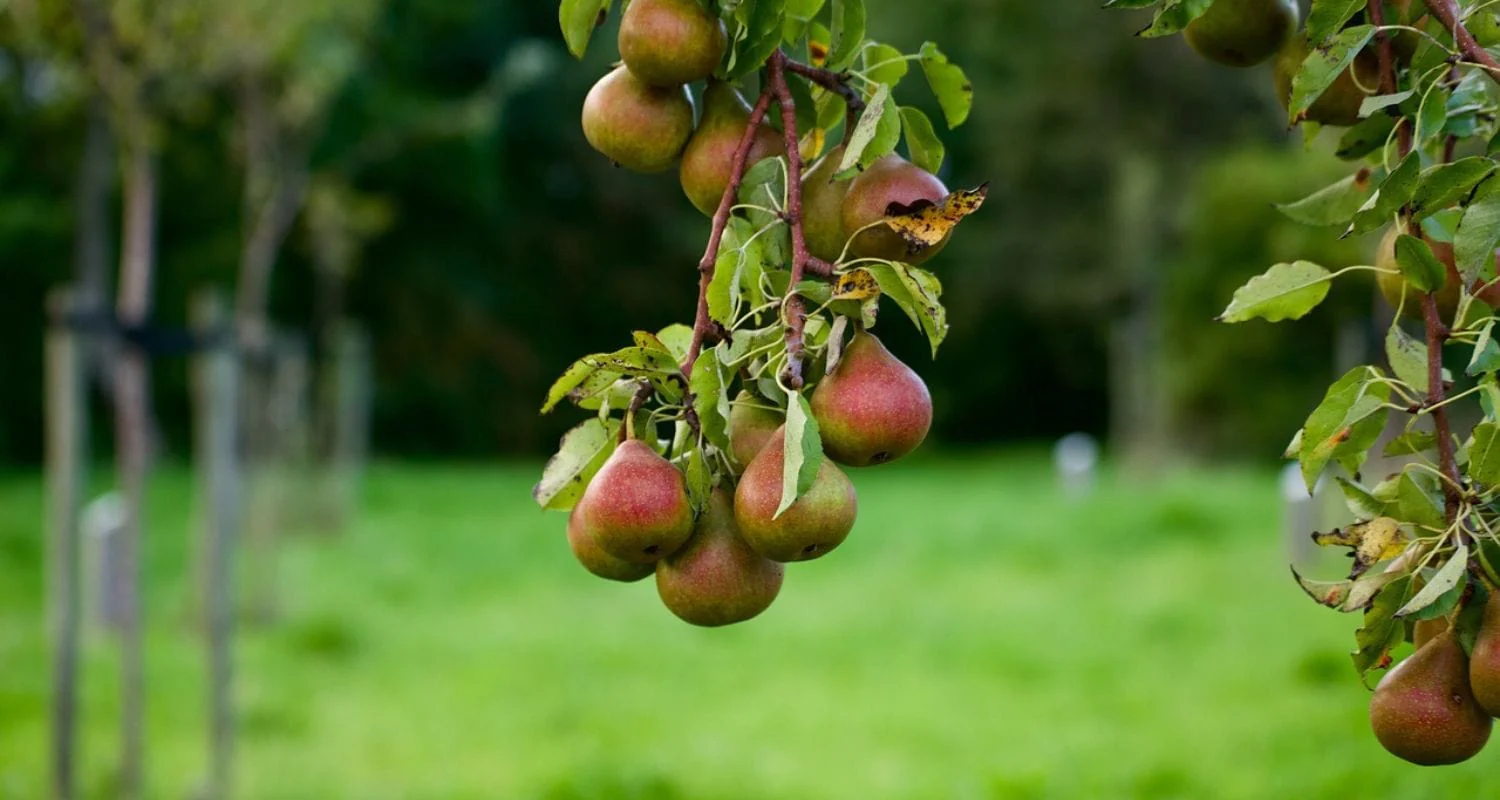
Effective pollination relies on insects transferring pollen between flowers, a process that falters when temperatures dip below 15°C or rain disrupts foraging. This article outlines seven practical, natural methods to enhance pollination, drawing on established horticultural practices suited to the UK’s temperate climate. These approaches emphasise sustainability, requiring minimal intervention while maximising returns from established or newly planted trees. Gardeners in regions like the South East or the Midlands, with their relatively milder conditions, will find these strategies particularly accessible. For those establishing an orchard, sourcing established specimens ensures quicker establishment; reputable suppliers offer fruit trees for sale that arrive ready for immediate planting, reducing the wait for blossoms.
The fruit tree specialists at ChrisBowers recommend prioritising pear trees for sale varieties within compatible pollination groups to secure consistent crops, as mismatches in flowering times can reduce fruit set by up to 50 per cent. This foundational step, combined with environmental enhancements, forms the basis of reliable pear production.
Selecting Compatible Varieties for Cross-Pollination
Choosing the right pear varieties is the cornerstone of natural pollination success, as most pears are not self-fertile and require a pollinator partner to set fruit effectively. In the UK, where pear blossoms typically emerge in early April, aligning flowering periods is essential to coincide with peak insect activity. Pollination groups, categorised from A to E based on bloom timing, guide selections: a Group B pear like ‘Conference’ pairs well with a Group A or C variety such as ‘Williams’ Bon Chrétien’ or ‘Doyenné du Comice’. This ensures pollen transfer occurs within the narrow two-week window when flowers are receptive.
Gardeners should assess their space before planting. For small plots or allotments, opt for dwarfing rootstocks like Quince C, which keep trees compact at 2-3 metres tall, allowing two or three varieties within a 4-metre span. Larger gardens accommodate half-standard trees on Quince A rootstock, reaching 4-5 metres, providing ample blossoms for bees and hoverflies. Triploid varieties, such as ‘Glou Morceau’, demand two diploid pollinators due to their sterile pollen, so plan accordingly to avoid disappointing harvests.
Evidence from the Royal Horticultural Society supports this method, noting that cross-pollinated pears yield 20-30 per cent more marketable fruit than isolated trees. To implement, map your garden’s layout, considering wind direction for pollen drift—pears benefit from gentle breezes that aid insect navigation without damaging delicate petals. Plant partners 5-10 metres apart, ideally in a north-south alignment to capture morning sun, which warms blossoms and attracts early foragers. Over time, this setup not only boosts current yields but establishes a resilient orchard ecosystem, where diverse genetics enhance disease resistance against common UK threats like pear scab.
Monitoring bloom synchrony in the first year allows adjustments, such as grafting a compatible scion onto an existing tree using simple cleft grafting techniques in late winter. This low-cost adaptation suits budget-conscious growers, ensuring long-term productivity without chemical aids. By focusing on variety selection, British gardeners can transform variable weather into an asset, fostering abundant pears that store well through autumn.
Planting Pollinator-Friendly Flowers Nearby
Integrating nectar-rich flowers around pear trees creates a supportive habitat for pollinators, naturally increasing visits to blossoms during the critical spring period. In Britain, where native bees and solitary wasps face habitat loss, this method counters declining insect populations exacerbated by urban expansion and wet winters. Select plants that bloom concurrently with pears, from mid-March to May, to provide a continuous food source that draws pollinators directly to the orchard.
Perennials like lungwort (Pulmonaria) and early-flowering primroses offer initial nectar in shaded understoreys, while mid-season favourites such as forget-me-nots (Myosotis) and honesty (Lunaria annua) fill gaps under taller trees. For sunnier edges, sow wildflower mixes containing bird’s-foot trefoil and red clover, which tolerate the UK’s clay-heavy soils and attract bumblebees—key pear pollinators capable of working in cooler conditions than honeybees. Avoid competitive species like bindweed, which can smother young trees; instead, use ground covers such as sweet woodruff to suppress weeds while feeding insects.
Studies from the University of Reading indicate that gardens with diverse floral borders see 40 per cent more pollinator activity on fruit crops. Position these plantings 1-2 metres from tree trunks to guide insects inward, creating a ‘pollinator corridor’ that extends from hedgerows to the canopy. In northern regions like Scotland, where frosts linger, choose hardy alpines such as aubrieta for frost pockets, ensuring year-round appeal.
Maintenance involves deadheading spent blooms to prolong flowering and incorporating compost to enrich soil, promoting robust growth. This approach yields dual benefits: enhanced pear set and a biodiverse garden that supports wider ecosystems. Over seasons, observe which flowers draw the most visitors—lady’s mantle often excels in damp climates—and adjust plantings accordingly. Such targeted enhancements make pollination effortless, turning pear trees into thriving focal points amid a tapestry of native flora.
Hand-Pollinating Blossoms for Reliable Set
When weather hampers natural pollination, hand-pollination provides a direct, chemical-free intervention to guarantee fruit development on pear trees. This technique, rooted in traditional orchard management, proves especially valuable in the UK’s unpredictable springs, where persistent drizzle can confine insects. By manually transferring pollen, gardeners achieve uniform crops, with trials showing up to 60 per cent yield improvements on isolated trees.
Begin in the morning when pollen is viable, using a soft artist’s brush or cotton swab to gently collect from anther sacs in male-phase flowers—recognisable by their upright, dusty stamens. Swirl into receptive female-phase blooms, identifiable by curled petals and sticky stigmas, focusing on clusters rather than individual flowers to mimic bee efficiency. Target 20-30 per cent of blossoms to conserve energy, prioritising central branches where fruit hangs accessibly.
For efficiency in larger orchards, shake branches lightly over a collection sheet to gather pollen en masse, then apply with a turkey feather for broader coverage. This method suits varieties like ‘Beurré Hardy’, which flower profusely but suffer from incomplete set in exposed sites. Wear gloves to prevent contamination, and work on dry days to ensure adhesion; humidity above 80 per cent risks clumping.
Historical records from Kentish orchards, a pear heartland, document hand-pollination’s role in sustaining exports during lean bee years. Modern adaptations include using battery-powered pollinators for speed, though manual tools suffice for home scales. Post-application, monitor for set by tagging pollinated clusters; success appears as tiny greenlets within two weeks. This hands-on practice not only secures harvests but educates on floral anatomy, empowering gardeners to intervene judiciously. Integrated with other methods, it forms a safety net, ensuring pears ripen reliably for crumbles and preserves.
Creating a Sheltered Microclimate for Blossoms
Pear blossoms thrive in warmth, yet Britain’s maritime climate often delivers chilly easterlies that chill flowers below pollination thresholds. Establishing a sheltered microclimate mitigates this, extending viable blooming periods and inviting more insect foragers. Windbreaks, whether natural or structural, reduce turbulence by 50 per cent within 10 metres, according to Met Office data, fostering conditions akin to sunnier southern counties.
Plant deciduous hedges like hazel or blackthorn along northern and eastern borders, allowing winter sun while blocking gales; these also host beneficial insects overwintering in bark crevices. For immediate protection, erect permeable netting or willow hurdles around young trees, spaced to permit bee access without trapping them. In urban settings, position pears against south-facing walls, where reflected heat advances flowering by a week, aligning with warmer spells.
Soil amendments enhance this sanctuary: incorporate gravel mulches to retain daytime warmth, preventing frost pockets that damage buds. In frost-prone areas like the Pennines, underplant with low evergreens such as hebe to trap rising cold air, creating a thermal buffer. Monitor with a simple thermometer hung in the canopy; aim for 12-15°C during blooms to sustain nectar flow.
Practical trials by the East Malling Research centre demonstrate that sheltered pears produce 25 per cent larger fruits due to sustained pollination. Seasonal adjustments, like temporary fleece drapes during late frosts, safeguard without overheating. This method’s subtlety integrates seamlessly, transforming exposed plots into productive havens where pollinators linger longer, boosting transfer rates naturally.
Pruning for Optimal Airflow and Access
Strategic pruning opens pear tree canopies, improving airflow and sunlight penetration to support healthy blossoms accessible to pollinators. Overcrowded branches, common in neglected UK trees, create humid micro-niches prone to fungal issues that deter insects, reducing visits by 30 per cent per Forestry Commission studies. Annual winter pruning, from November to February, establishes an open framework that endures.
Employ the modified central leader system for bush trees: remove inward-growing shoots and thin clusters to 10-15 cm spacing, ensuring each bears 3-5 buds for next season’s flowers. For espaliers or cordons, trim lateral growth to three leaves beyond the basal cluster, promoting fruiting spurs where pollinators concentrate. Avoid over-pruning, which stresses trees and delays recovery; limit to 20 per cent of wood annually.
In humid regions like Wales, prioritise ventilation to dry petals post-rain, preventing botrytis that repels foragers. Use sharp secateurs for clean cuts, applying healing paste only to large wounds to minimise sap loss. Spring tipping of new shoots directs energy to blossoms, with evidence from Long Ashton Research showing pruned trees yielding 15-20 kg more fruit.
This technique enhances aesthetics too, shaping trees for small gardens without compromising vigour. Observe post-prune to refine: if airflow lags, remove a crossing branch the following year. Pruning thus underpins pollination by crafting inviting structures, where light and breeze conspire to draw nature’s workforce.
Enhancing Soil Health with Organic Mulch
Healthy soil underpins vigorous pear growth, with nutrient-rich profiles sustaining abundant blossoms that attract pollinators. Organic mulching addresses Britain’s often nutrient-leached loams, locking in moisture and fostering microbial life essential for root uptake. Applied in spring, a 5-7 cm layer of well-rotted compost or bark suppresses weeds that harbour pests, while gradually releasing nitrogen for bud formation.
Select mulches suited to local conditions: leaf mould excels in acidic Devon soils, while mushroom compost balances alkaline clays in the Cotswolds. Extend coverage to the drip line, avoiding trunk contact to prevent rot. This practice boosts earthworm activity, aerating soil and recycling nutrients, with Rothamsted Research linking mulched orchards to 35 per cent higher pollinator diversity via improved floral displays.
Incorporate mycorrhizal fungi inoculants during mulching to enhance phosphorus absorption, critical for pollen production. Water deeply post-application to activate decomposition, then top up annually. For container-grown dwarf pears, refresh mulch quarterly to counter evaporation in pots.
Challenges like excess rainfall in the Lake District demand free-draining additions like grit within mulch layers. Long-term, this builds soil organic matter to 5 per cent, stabilising pH for optimal nutrient availability. Mulching thus quietly amplifies pollination by fortifying trees against stress, ensuring blossoms remain vibrant and inviting through extended seasons.
Promoting Biodiversity to Sustain Insect Populations
Fostering a diverse garden ecosystem sustains pollinator populations year-round, providing overwintering sites and alternative forage that bolsters spring pear visits. In the UK, where 97 per cent of wildflower meadows have vanished since 1930, per Buglife charity, deliberate habitat creation counters this loss, increasing orchard insect density by 45 per cent.
Install bee hotels from hollow stems and drilled logs in sheltered nooks, stocked with native mason bees that specialise in fruit tree pollen. Sow cover crops like phacelia under trees in autumn, offering autumn nectar for late foragers and green manure for soil. Encourage ground-nesting solitary bees by leaving bare earth patches, mulched lightly to retain warmth.
Avoid broad-spectrum sprays, opting for companion plants like tagetes to deter aphids naturally. Bird baths and log piles draw auxiliary species—robins consume pests, freeing resources for pollinators. Monitor with pitfall traps to gauge diversity, adjusting for gaps like lacking butterflies via nettle clumps.
Lancaster University research affirms that biodiverse plots yield 20 per cent more pears through consistent visitation. Scale to your space: a suburban plot benefits from window boxes of borage, while rural holdings incorporate wild margins. This holistic strategy embeds pear trees in a living web, where mutual dependencies ensure pollination’s continuity, yielding not just fruit but ecological harmony.
In summary, these seven methods equip British gardeners with tools to overcome climatic hurdles, cultivating pears that reward patience with bountiful, home-grown produce. Consistent application yields compounding benefits, from fuller branches to enriched landscapes.
