

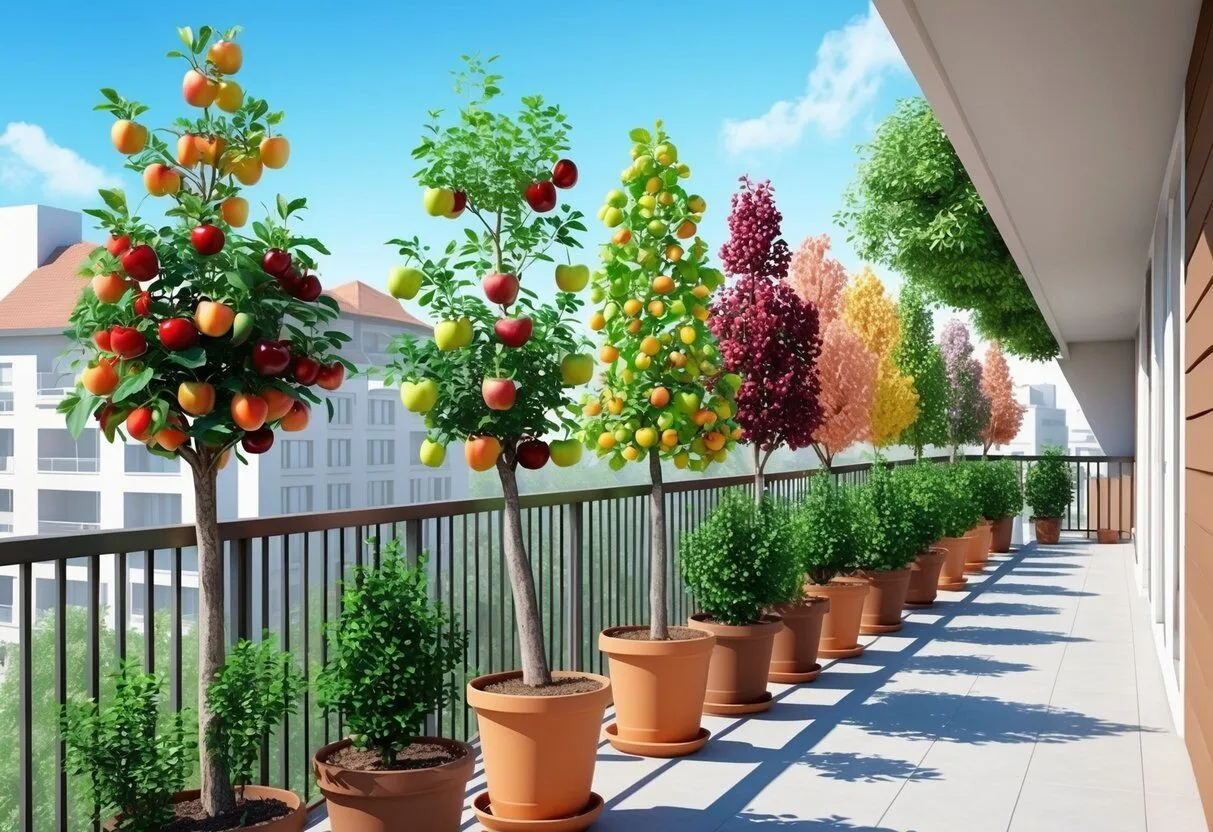
Home-grown produce often yields from orchards, yet balconies provide viable opportunities for cultivation. Dwarf and miniature fruit trees, bred specifically for confined areas, enable residents to harvest fresh fruit without requiring expansive gardens. These varieties, typically grafted onto compact rootstocks, thrive in pots and demand minimal pruning to maintain their size. They suit the variable British weather, offering yields comparable to larger specimens when properly managed. This selection of five trees emphasises reliability in UK conditions, focusing on hardiness, pollination needs, and container compatibility.
The fruit trees experts at Fruit-Trees nursery emphasise that success with balcony orchards hinges on choosing self-fertile cultivars to avoid dependency on neighbouring plants. For detailed selection criteria, see fruit trees for small gardens. If you are looking to buy miniature apple trees suited to these constraints, prioritise those certified by the Royal Horticultural Society for disease resistance and vigour.
Dwarf Apple Trees: Reliable Producers in Limited Space
Dwarf apple trees stand out as an accessible entry point for balcony gardeners, given their adaptability and prolific output. Grafted onto M27 rootstock, these trees reach a mature height of 1.5 to 1.8 metres, fitting neatly into 45-litre containers. Varieties such as ‘Red Spur’ and ‘Golden Delicious’ dwarf forms excel in the UK’s temperate climate, ripening from late summer through autumn. ‘Red Spur’, a compact spur-bearing type, produces crisp, red-skinned fruits ideal for eating fresh or in salads, with harvests of up to 10 kilograms per tree in optimal years.
Establishing a dwarf apple requires attention to site selection. Balconies facing south or west capture the six to eight hours of daily sunlight essential for fruit set. Soil in pots should be a free-draining loam-based mix, amended with grit to prevent waterlogging during prolonged rain. Planting in spring allows roots to settle before summer growth; incorporate slow-release fertiliser to support bud formation. Pruning annually in late winter removes overcrowded branches, promoting air circulation and reducing fungal risks like apple scab, prevalent in humid British conditions.
Pollination presents a consideration, though many modern dwarfs are partially self-fertile. For assured yields, position two compatible varieties within 4.5 metres, such as ‘Red Spur’ alongside ‘James Grieve’. Pests, including woolly aphid and codling moth, can be managed organically with neem oil sprays applied at bud break. Over three years, a well-tended tree yields consistently, contributing to household self-sufficiency. Gardeners report satisfaction in picking dessert apples mere steps from the kitchen, enhancing meals with home-grown tartness. These trees also attract pollinators, boosting local biodiversity in concrete surroundings.
In terms of maintenance, dwarf apples demand moderate watering—deep soaks weekly in dry spells, allowing the top 5 centimetres of compost to dry between applications. Mulching with bark chips conserves moisture and suppresses weeds in pots. Winter protection involves wrapping pots in bubble wrap to shield roots from frost, a common hazard in northern UK regions. Yields peak in years four to six, with fruits storing for up to three months in cool, dark spaces. This longevity makes dwarf apples a sound investment for long-term balcony productivity.
Compact Pear Trees: Elegant Yields for Urban Heights
Pear trees in dwarf form offer a refined addition to balcony collections, combining aesthetic appeal with substantial harvests. On Quince C rootstock, they attain 1.8 to 2.1 metres, suitable for 50-litre pots that provide stability against wind. Recommended cultivars include ‘Concorde’ and ‘Conference’ dwarfs, both bred for UK resilience. ‘Concorde’, a cross of ‘Conference’ and ‘Comice’, delivers juicy, sweet pears in September, resistant to pear rust and fireblight—key threats in damp climates.
Site preparation mirrors that of apples, favouring sheltered, sunny exposures to evade pear midge infestations. Use John Innes No. 3 compost for nutrient retention, feeding with a high-potassium formula in spring to enhance fruit quality. Plant between February and April, staking if balcony gusts exceed 20 knots regularly. Pruning focuses on summer tip reduction to control height, alongside winter shaping for an open vase structure that admits light to developing fruits.
Self-fertility varies; ‘Concorde’ performs adequately alone but benefits from a ‘Williams’ Bon Chrétien’ companion for cross-pollination. This duo ensures biennial cropping avoidance, a pitfall in isolated plantings. Organic controls for birds involve netting from June, while codling moth traps hung in May disrupt breeding cycles. Expect 8 to 12 kilograms annually from mature specimens, with pears ripening off the tree for peak texture.
Balcony pears require vigilant irrigation, as container roots dry faster than ground-planted ones. Aim for consistent moisture without saturation, using saucers to capture runoff during heavy showers. Frost pockets on elevated spaces necessitate fleece covers during late blooms. These trees’ glossy foliage and white spring flowers add ornamental value, transitioning seamlessly to russet-skinned harvests. For British households, pears provide versatile produce—poached for desserts or sliced for cheese boards—fostering a connection to seasonal eating.
Longevity extends 15 to 20 years with repotting every four years into larger vessels. Soil refreshment prevents nutrient lockup, sustaining vigour. Dwarf pears thus embody practicality, yielding gourmet fruit in spaces once deemed unsuitable for orchards.
Dwarf Plums: Compact Sources of Stone Fruit
Dwarf plum trees deliver the allure of stone fruits in manageable proportions, ideal for balconies craving summer abundance. Rooted on Pixy stock, they stabilise at 2 to 2.4 metres, thriving in 60-litre terracotta pots for superior drainage. ‘Victoria’ and ‘Merryweather Damson’ dwarfs lead selections, tailored to UK’s cool summers. ‘Victoria’, a dual-purpose variety, bears heavy crops of red-purple plums from July, versatile for jams or fresh consumption, with inherent resistance to bacterial canker.
Optimal placement secures afternoon sun to ripen sugars, using ericaceous compost if balcony soil tests alkaline. Autumn planting aids root development, mulched with composted bark for winter insulation. Pruning in June removes watersprouts, maintaining a bush form under 2 metres. This timing minimises silver leaf disease entry, a fungal issue in pruned wounds during dormancy.
Most dwarfs self-pollinate effectively, though ‘Victoria’ pairs well with ‘Czar’ for enhanced sets. Harvest by twisting fruits gently, yielding 10 to 15 kilograms per tree. Aphids and plum moth caterpillars respond to pheromone traps and horticultural soap, applied proactively. In urban settings, these trees filter pollutants, their broad leaves offering microclimate benefits.
Watering follows a regime of 10 litres weekly, adjusted for rainfall data from the Met Office. Pots elevated on feet prevent rot in persistent wet weather. Birds deter via reflective tapes, preserving the crop for human enjoyment. Plums’ tart-sweet profile suits British palates, evoking traditional puddings without vast acreage.
Repotting biennially and top-dressing with organic matter extend productivity to 12 years. Dwarf plums thus affirm that flavourful yields need not compromise on space, enabling city residents to preserve summer’s bounty through bottling or freezing.
Miniature Cherry Trees: Summer Delights Elevated
Miniature cherry trees infuse balconies with vivid colour and prompt rewards, their diminutive stature belying generous outputs. On Gisela 5 rootstock, heights cap at 1.8 metres, accommodated in 45-litre containers. ‘Stella’ and ‘Lapins’ dwarfs prevail in UK trials, self-fertile and hardy to -15°C. ‘Stella’, a sweet cherry, clusters ruby fruits in July, perfect for snacking or clafoutis, showing tolerance to cherry blackfly.
South-facing balconies maximise pollination by bees, drawn to pendulous blooms. Employ multipurpose compost, fortified with mycorrhizal fungi at planting in March for root establishment. Annual winter pruning thins interior growth, fostering fruiting spurs without height gain.
As fully self-fertile options, single trees suffice, though multiples amplify yields. Nets shield against bullfinches, while grease bands on trunks block ants. Crops reach 7 to 10 kilograms, with stems snapping cleanly at maturity.
Irrigation demands even supply—drip systems mitigate evaporation in exposed positions. Fleece during April frosts protects blossoms, critical for set in variable springs. Cherries’ brief season encourages prompt use, perhaps in cordials or with dairy.
Sustained care includes pH monitoring (6.0-7.0) and lime avoidance. These trees’ sculptural branches enhance winter vistas, transitioning to fruit-laden canopies. For UK growers, miniature cherries symbolise accessible luxury, harvesting jewels from urban aeries.
Dwarf Apricots: Exotic Warmth in Cool Climates
Dwarf apricot trees bring continental flair to British balconies, their golden orbs evoking sunnier shores. On Torinel rootstock, they hold at 2 metres, in 50-litre pots with excellent aeration. ‘Isabelle’ and ‘Compacta’ varieties shine, bred for northern latitudes. ‘Isabelle’ yields sweet, orange-fleshed fruits in August, compact form resisting peach leaf curl.
Sheltered, sunny spots mimic Mediterranean needs, using alkaline-tolerant compost. Plant in April, feeding with citrus booster for blossom initiation. Prune post-harvest to shape, avoiding wet weather to curb bacterial spot.
Self-fertile, they fruit solo, though fans aid consistency. Protect blooms from late frosts with cloches. Yields of 5 to 8 kilograms reward patience, fruits splitting if overripe.
Deep watering and humidity control via pebble trays suit containers. Apricots’ almond-like kernels add culinary depth, in tarts or liqueurs.
These trees demand vigilance against aphids but repay with aromatic harvests, bridging exotic and everyday in UK gardening.
General Care Strategies for Balcony Fruit Trees
Effective management unites these dwarfs, ensuring sustained health. Containers of at least 45 litres, with drainage holes, form the base; unglazed clay promotes breathability. Position to balance light and wind, rotating quarterly for even growth.
Compost refresh every two years prevents compaction, incorporating worm castings for microbes. Fertilise monthly from April to August with balanced NPK, tapering to avoid soft growth prone to pests.
Integrated pest management favours beneficial insects; ladybirds control aphids naturally. Monitor via weekly inspections, intervening with approved sprays. Wintering involves grouping pots in leeward corners, insulated against heave. For pollination, hand-brush if bees scarce.
These practices yield resilient orchards, transforming balconies into productive retreats.
Sourcing and Establishing Your Balcony Orchard
Acquiring quality stock underpins success; reputable nurseries guarantee true-to-type plants. When you buy fruit trees, seek bare-root options in winter for cost savings and establishment ease. Plant at the same depth as nursery soil, firming gently. Initial staking counters top-heaviness. Community allotments or online forums share experiences, while RHS resources guide troubleshooting. Over time, your mini orchard fosters sustainability, reducing food miles and enhancing wellbeing.
In conclusion, these five trees prove that urban constraints need not bar fruitful pursuits. With methodical care, balconies become bountiful.
